LAP SLIP No. 0001The book is coming. Read the Introduction now and get Chapter 1 free. Get it

KITCHEN TABLE CIRCLES

Handle it out loud.

Small groups of men who meet four times, one meeting per part of the book, and say one problem out loud each time. Named for the kitchen table where Robert's parents handled their problems in front of him.
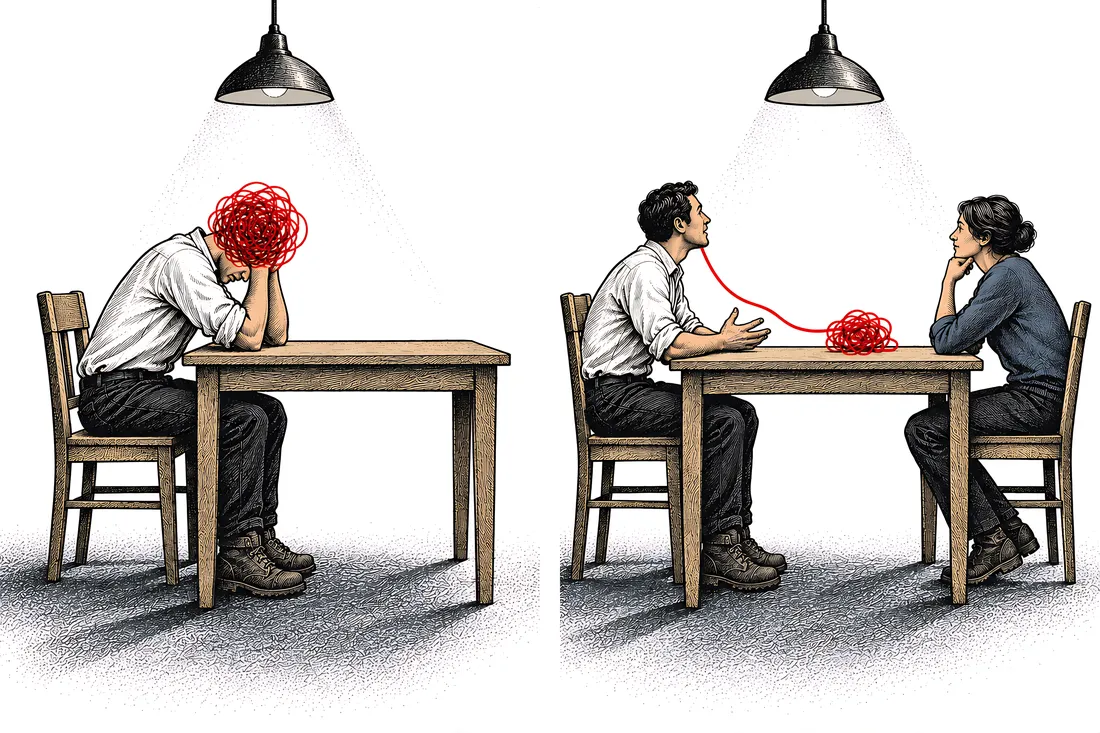
Illustration: a man across a table from someone with the tangle of his problem laid out between them

How a Kitchen Table circle works

WHO

4 to 6 men

Friends, coworkers, a team, a church group, men who just read the book. Small enough that everyone talks.

WHEN

4 meetings

One per part of the book. 60 to 90 minutes. Weekly or every other week.

WHERE

Any table

A kitchen, a back office, a video call. A table matters more than a room.

WHAT

One problem each

Every man says one problem out loud. No fixing it for him. He leaves with one thing to do.

GROUND RULES

You're not asking for advice. You're saying it so it exists.

  1. 01What's said at the table stays at the table.
  2. 02No fixing. Listen, say "Heard," and let him finish.
  3. 03One problem each, out loud, every meeting.
  4. 04Everyone leaves with one thing to do, from the chapter's "Do this today."
  5. 05This is not therapy. If someone is carrying depression, anxiety or anything medical, point him to professional help. In the US, call or text 988.

DISCUSSION GUIDE

Four meetings. One part each.

MEETING 1 · CHAPTERS 1 TO 4

The Reaction

  1. Which of the four ways do you meet most problems: hide, carry, patch or collect? Be honest.
  2. What's one piece of bad news from the last month you could have said "Good" to?
  3. Say one problem out loud to the table. Nobody responds with advice. Just "Heard."
  4. What are you waiting for? Name it, and name the date you'll stop.

MEETING 2 · CHAPTERS 5 TO 7

The Reading

  1. Pick a problem that keeps coming back. Ask why until you're back at the beginning. Where did you end up?
  2. Put a one-year price on one problem, out loud. Fix it, or walk?
  3. Where are you deciding from the report instead of the floor?

MEETING 3 · CHAPTERS 8 TO 10

The Response

  1. Cut your biggest plan to three steps. Tell the table step one, and when you'll do it.
  2. What have you patched more than twice? What was it originally for?
  3. What's the one thing nobody around you is saying?

MEETING 4 · CHAPTERS 11 TO 13

The Transfer

  1. Which lesson have you paid for twice? What's the one line you'll do differently?
  2. Which room do you run the six moves in, and which room do you skip?
  3. Name one problem that isn't yours but is within your reach. Who is it costing?

START OR JOIN A CIRCLE

Pull up a chair.

Hosts get the discussion guide, the Carry or Collect placemat and the Day One Map as printables.