01
Registration
Registering a small business should take days and a small fee, not months of forms. Every extra step is a founder who never starts.
LAP SLIP No. 0001The book is coming. Read the Introduction now and get Chapter 1 free. Get it
CHAPTER 13 · THE BIGGER CAUSE
Most small businesses don't fail because the idea is bad. They fail on the basics: waiting too long to get paid, no access to credit, no way to sell across a border, and red tape that costs more than they can afford.
THE RAILS
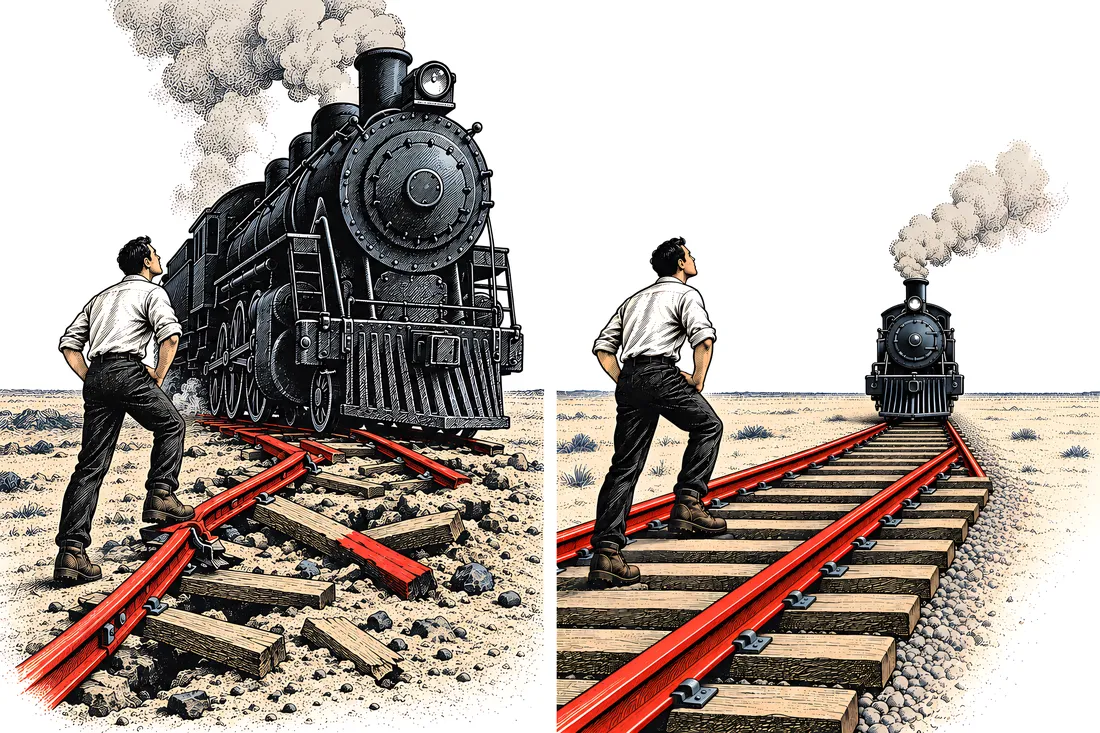
A train doesn't fail because the engine isn't powerful enough. It fails because the rails are broken, missing or too expensive to lay. When the rails are simple, cheap and fair, more people can start a business, keep it alive and grow it. When they aren't, it doesn't matter how good the idea is or how hard the founder works.
That's where the method ends up once you've run it long enough. It stops being about your problems.
THE LADDER
You don't skip rungs. Most men reading this are on the first one, and that's the right place to start.
Find your rung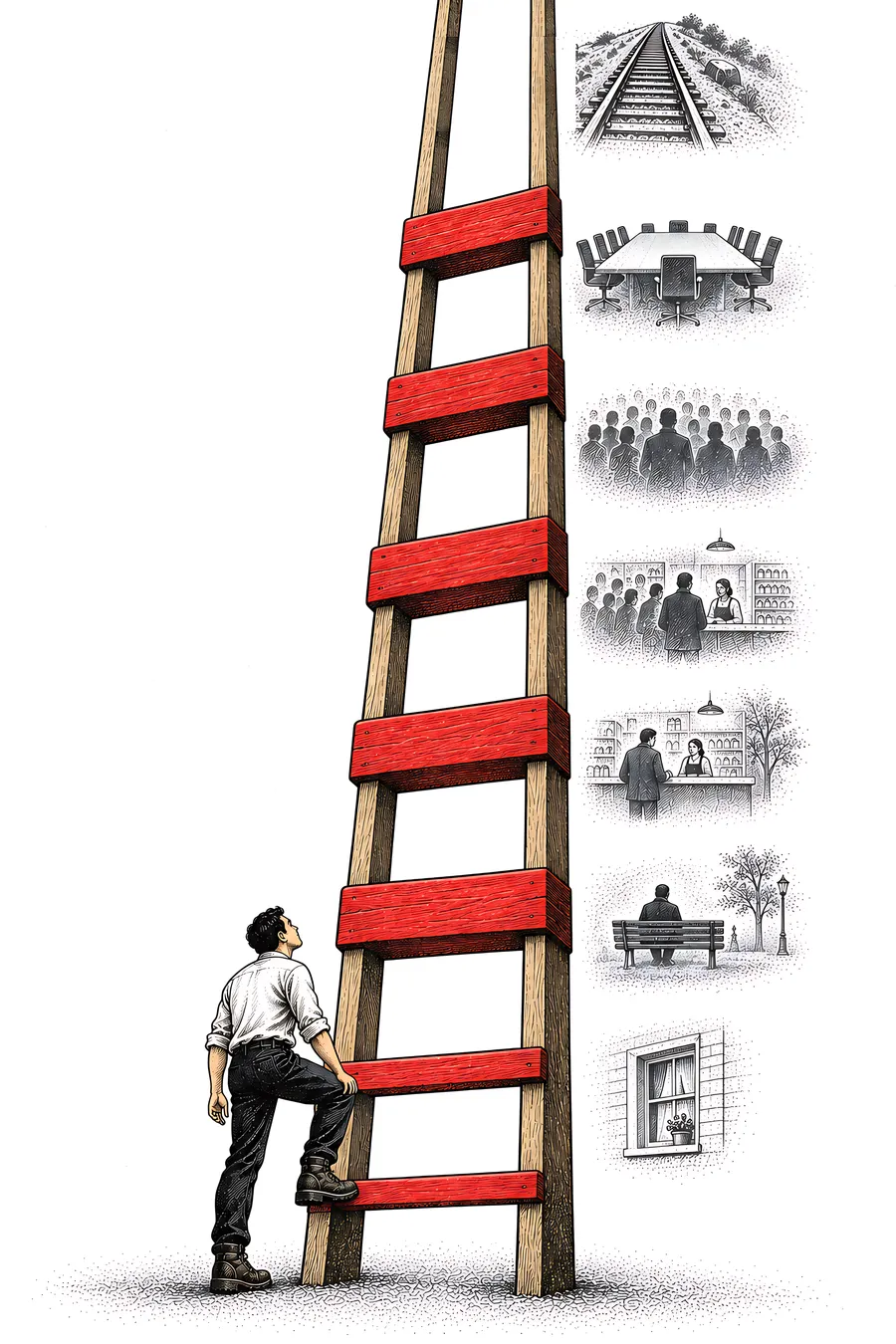
The rails. One rail fixed is a problem solved for everyone who'll ever run on it.
Solving problems for the man with no seat at the table opens doors you once found closed.
When you solve a problem for people who'll never know your name, the payment is reach.
A problem solved well enough that strangers pay for the solution.
One problem, understood, can pay someone you'll never see again.
Your problems, solved, pay the people under your roof first.
Every problem you solve builds you. Calm when the news is bad, character when nobody's watching.
WHAT ROBERT STANDS FOR
01
Registering a small business should take days and a small fee, not months of forms. Every extra step is a founder who never starts.
02
Small sellers should get paid in days, not months. Faster, cheaper payments keep cash flowing and doors open.
03
Small-business credit should be judged on real sales data, not only on collateral.
04
It should be cheap and simple for a small shop to sell to a customer in another country.
05
People with a past deserve a real second chance at work and at starting a business.
WHAT THE PAYOFF IS
Problems stop piling up when you handle them as they land.
People look at a man who handles things in a different light.
Every problem has a dollar sign attached, and the man who sees it first collects it.
Eighteen-hour days become four-hour days once you know which four hours matter.
The ability to solve problems for people who'll never know your name.
TO THOSE WHO HAVE BEEN COUNTED OUT
"I've never believed that the size of an economy is what matters. What matters is whether one person, anywhere, can start something of their own and make a living from it. I know what it's like to start with nothing. Everything I've built rests on one thing: someone gave me a chance."
ROBERT NIKIC, PROBLEMS PAY, CHAPTER 13
Robert is an advisor on innovation and economic growth to an international council working on United Nations SDG 8 & 9. More on that work at robertnikic.com.
The content of this publication has not been approved by the United Nations and does not reflect the views of the United Nations or its officials or Member States.