RULE 04 OF 13 · PART 1: THE REACTION
Don't trust the calm.
Calm is dangerous when you've lost sight of the vision. Ask what it's costing you.
WHERE YOU ARE · SHARPENING MOVE 1: SAY "GOOD."
Everyone tells you to watch out for the crisis.
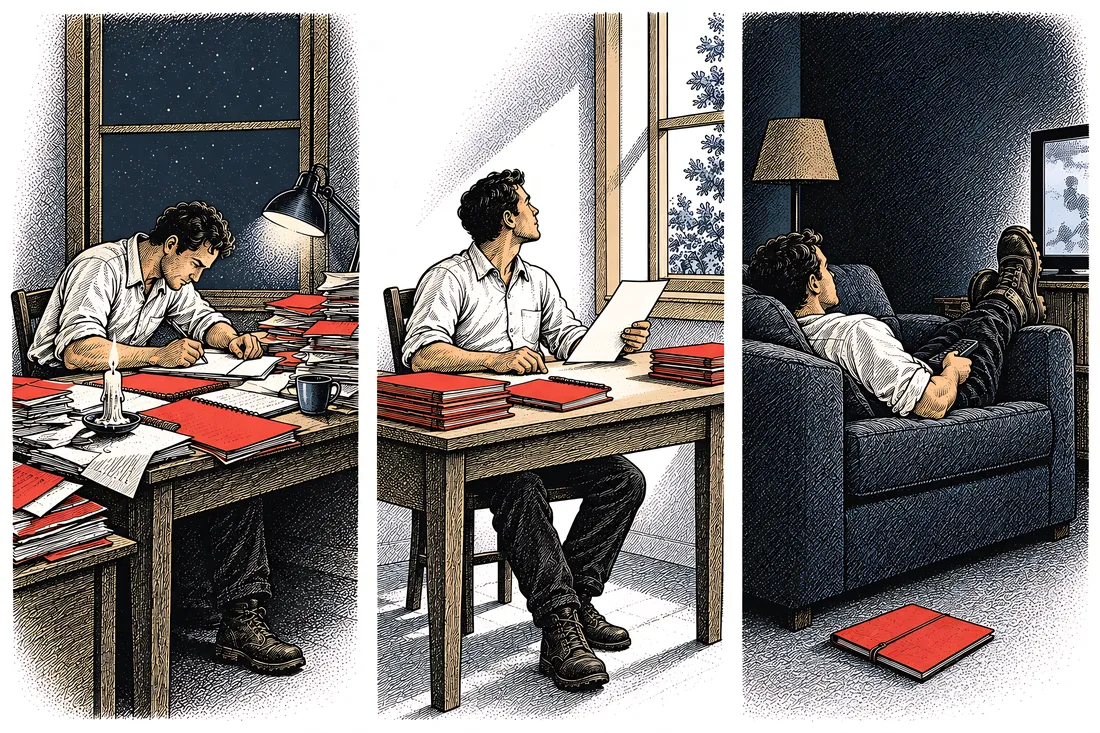
Nobody tells you to watch out for the quiet. The crisis announces itself. The quiet doesn't. Calm doesn't mean the problems are gone. It means you've stopped looking for them.
The skills you stopped sharpening because the paycheck kept coming. The conversation you stopped having because nothing felt urgent. The customer who quietly stopped ordering while the numbers still looked fine. Problems you've stopped looking for don't stop charging. They compound in the dark, and you find out the balance all at once.
This isn't a case for living on fire. Steady is showing up every day for something. Comfortable is showing up every day because you stopped asking why. Chapter 4 gives you the difference between vigilance and anxiety, the two kinds of calm, and a test you can run on your own week.
THE RULE, AGAIN
Every problem has a price, and every problem pays.
NOBODY GETS TO NOT PAY. YOU ONLY GET TO CHOOSE THE COLUMN.
SAY IT OUT LOUD
Calm is dangerous when I've lost sight of the vision.
Ask yourself one question: "Am I still moving toward the vision, or just watching the movie?" If you can't say what the vision is in one sentence, that's your answer.
THE NEXT MOVE
The full chapter is in the book.
The stories, the objections and the teaching behind Rule 4 are in Chapter 4 of Problems Pay.