RULE 13 OF 13 · PART 4: THE TRANSFER
The bigger the problem, the bigger the pay.
Once you can collect on your own problems, you get to collect on other people's.
WHERE YOU ARE · ALL SIX MOVES, POINTED AT BIGGER PROBLEMS
Think about the biggest problem you've solved so far.
Notice one thing about it: it was yours. The pain was yours, the price was yours and the payment was yours.
The pay changes when you point the same skill at problems that aren't yours. One man's problem pays one man. A problem shared by a thousand men pays everyone who solves it, and it pays the solver most of all, in money, in reach and in the kind of respect you can't buy.
Chapter 13 lays out the seven-rung ladder, the five kinds of payoff, and the rails: the basic systems that decide whether a small business can run at all.
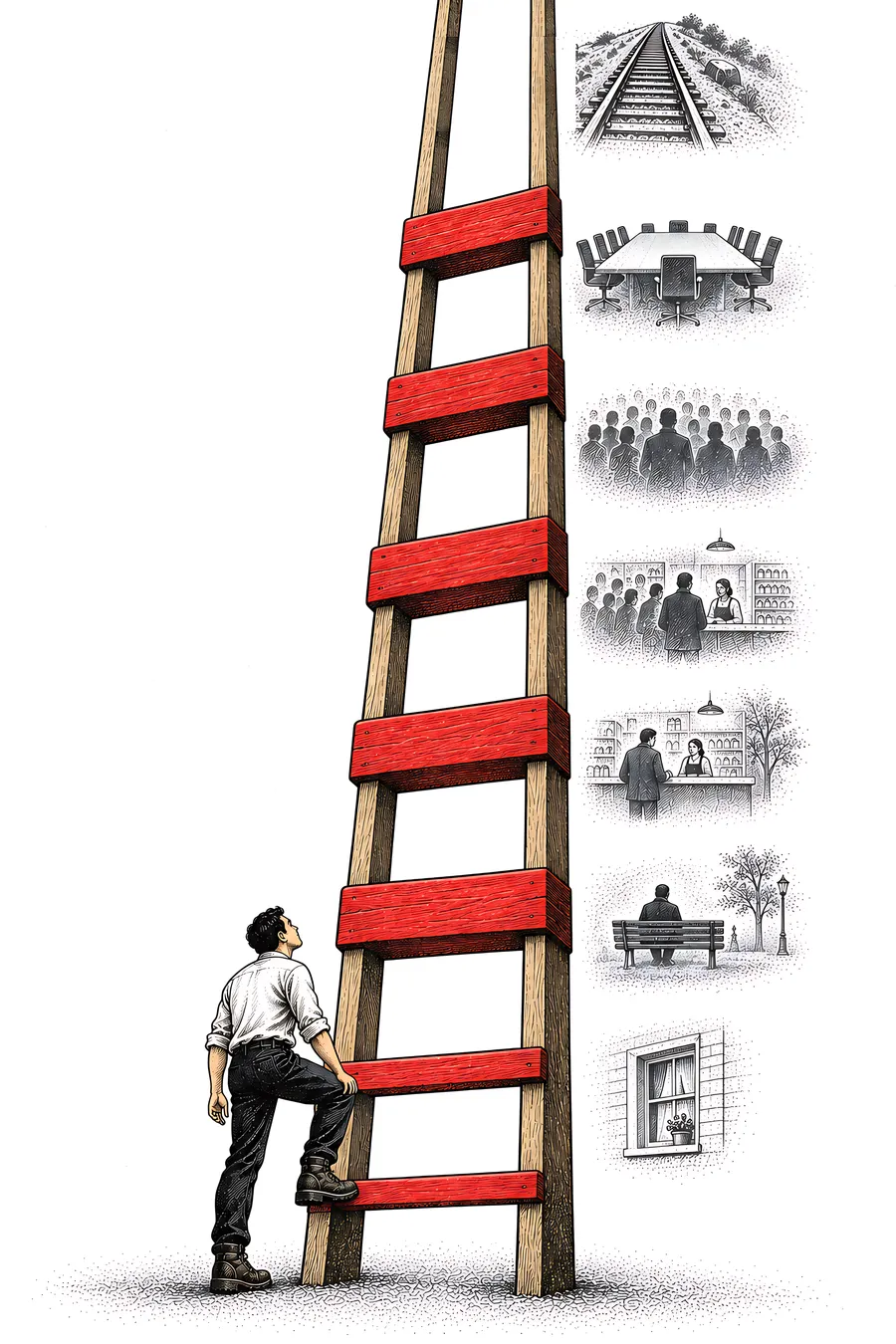
THE LADDER
You don't skip rungs.
Yourself, your home, one stranger, your first customers, strangers you'll never meet, other founders, whole systems. Each rung pays more than the one below it.
THE RULE, AGAIN
Every problem has a price, and every problem pays.
NOBODY GETS TO NOT PAY. YOU ONLY GET TO CHOOSE THE COLUMN.
SAY IT OUT LOUD
The bigger the problem I can solve, the more people it pays.
Write down one problem that isn't yours but is sitting within your reach: under your roof, on your team, in your neighborhood. Don't solve it yet. Just name it, and name who it's costing. That's the first move on the next rung.
THE NEXT MOVE
The full chapter is in the book.
The stories, the objections and the teaching behind Rule 13 are in Chapter 13 of Problems Pay.